
Women building businesses in fragile contexts; reflections from the WEOF Growth Lab in South Sudan
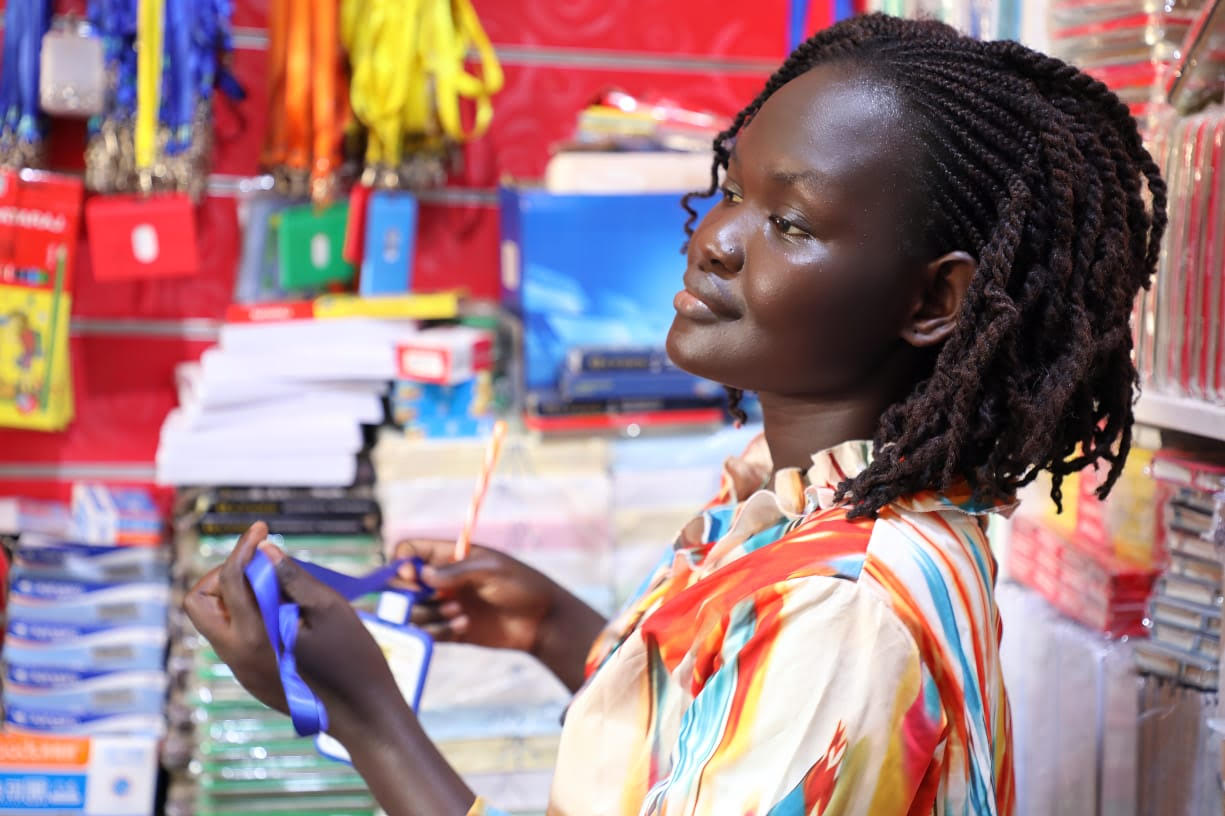
South Sudanese woman entrepreneur
In Juba, South Sudan, many women begin the workday juggling family responsibilities and reviewing orders, deliveries, and production schedules, before they even open their shop, office, or workshop. In one of the world’s most fragile economies, women entrepreneurs persevere and inspire, delivering critical products and services, creating jobs, training their employees, ultimately fulfilling a diverse set of critical roles to enable market systems and create much needed livelihoods. This International Women’s Day, 8th March 2026, we celebrate 18 such women entrepreneurs, who successfully participated in the Growth Lab of the Women Entrepreneurial Opportunity Facility (WEOF).
WEOF is a component of the South Sudan Women’s Social and Economic Empowerment Project (SSWSEEP) - a World Bank funded program of the Government of South Sudan led by the Ministry of Gender, Child, and Social Welfare. WEOF is implemented by UN Women, the International Rescue Committee (IRC), and Open Capital Advisors (OCA), on behalf of the Ministry.
We, Open Capital Advisors, as lead implementer of the WEOF Growth Lab, have spent the past year working with 18 inspirational women entrepreneurs in Juba; they are often overlooked for support and unable to access financial markets, despite fulfilling important roles across diverse sectors, including construction, agribusiness, education, healthcare, and hospitality, among other. In this blog post, we share key reflections on realities on the ground in Juba for women entrepreneurs, and how to support them to scale their businesses amidst a very challenging environment.
The “missing middle” of women-led SMEs
Many support programmes for women economic empowerment (WEE) in vulnerable states focus on informal microenterprises and short-term relief, while large businesses can often afford support and access financing from investors and banks. In between sits a “missing middle” of women-led small- and medium sized enterprises (SMEs): businesses that are already formal, generating stable revenues, paying staff, and serving hundreds or thousands of customers, but with limited access to finance, networks, or technical support.
The day‑to‑day reality for women entrepreneurs
Women entrepreneurs in South Sudan navigate a difficult environment defined by political insecurity, high inflation, and stiff competition from imported goods, particularly from Uganda and Kenya. Further exacerbating the reality of a volatile market is the lack of stable electricity or internet, and heavy reliance on cash transactions, making it harder to build financial track records that financiers recognise. While harsh market conditions persist, these women must also navigate gender barriers, including limited collateral in their own name, social norms about “acceptable” sectors for women, and safety concerns when travelling or working late, among other, while often also having substantial domestic responsibilities.
During our market assessment, several women reported hesitation in sharing financial information for fear of attracting harassment, informal taxation, and the hustle of spending time explaining their legitimacy to suppliers, landlords, and officials. A recent WEOF Connect event on taxation confirmed that the women face overlapping tax claims from different authorities, unclear rules, and ad‑hoc inspections. These create uncertainty and consume valuable time that could otherwise be spent running the business. Beyond the regulatory hurdles, access to childcare, safe transport, and trusted professional networks are uneven and often dependent on personal relationships.
Doing business with resilience and impact
Despite all the challenges, these 18 women entrepreneurs are finding ways forward, and creating significant socio-economic impact in South Sudan. Within the WEOF Growth Lab, we have seen women‑led businesses process local crops into high‑value agriculture and food products, provide affordable medicines and healthcare, expand access to quality education, offer quality travel services, and offer waste management solutions that keep neighbourhoods clean. Many of these businesses intentionally hire and train women, expanding gender parity in job access in sectors like construction, hospitality, and services, and strengthening local value chains by sourcing from smallholder farmers, local artisans, and nearby suppliers rather than importing products from abroad.
A notable example of this is Nyager Guet, profiled in a recent World Bank blog, who returned from life as a refugee to build a real estate company in Juba. Through WEOF support, she has been able to formalise her systems, better understand demand, and position her firm at a time when South Sudan’s real estate market is opening up to new investors, all while mentoring and employing women in a traditionally male‑dominated sector. Her journey mirrors what we see across the Growth Lab cohort of women overcoming daily challenges with resilience and perseverance, and in the process, creating new opportunities for their staff, suppliers, and communities.
How the WEOF Growth Lab supports growth
The Growth Lab is designed around realities unique to each business: Rather than “imposing” what support is provided, as is often seen on SME support programs, we begin with a business diagnostic for each company, considering strategy, operations, sales, financial management, people, and impact, to fully understand where support can unlock the most value and growth.
We then work alongside founders and management teams to co‑create and deliver tailored support. For some, this means clarifying their growth strategy and sharpening sales and marketing; for others, strengthening financial management, digitising processes, or preparing for external investment. Building on this, entrepreneurs receive senior management coaching on topics they choose themselves, which may include leadership, marketing, investment readiness, performance management, or implementation of new tools, among other. It is often the first time that these women entrepreneurs receive such tailored one-on-one support, with us acting as their sounding board and external advisor, leveraging our experience from supporting over 800 SMEs across Africa.
Catalytic grants, managed by IRC and agreed jointly with each entrepreneur, help finance some of the most urgent and critical investments for each business. These funds are used to purchase machinery, install clean energy solutions, improve storage and production facilities, set up basic accounting systems, or invest in targeted marketing. The result of investment is more local value addition, more stable service delivery, and more quality jobs, often with a deliberate focus on hiring more women.
The way forward
Our early experience through the WEOF Growth Lab in South Sudan confirms what many others have found in fragile and conflict‑affected settings: the constraint is not the ambition or capacity of women entrepreneurs, but the market systems they operate in. While improving the regulatory environment, strengthening basic infrastructure, and building a more enabling financial sector remains essential, there is also a clear case to expand financial support and hands‑on advisory for women‑led SMEs that are already demonstrating commercial traction and social impact.
This International Women’s Day, our key takeaway from Juba is clear: when we equip women who are actively building businesses in fragile markets, with capital, practical support, and a more enabling environment, we are not only building individual success stories; we are investing in the foundations of more resilient, inclusive local economies.
We look forward to continuing this work with our partners and seeing programs like WEOF successfully scale beyond Juba throughout South Sudan to drive women economic empowerment, improved livelihoods, better access to critical products and services, and ultimately broader economic and social development. If you are working on similar challenges or see opportunities to collaborate, it would be our pleasure to connect and explore synergies and opportunities to support more women entrepreneurs in fragile markets.
