
Dismantling Structural Barriers for Women Farmers in Africa
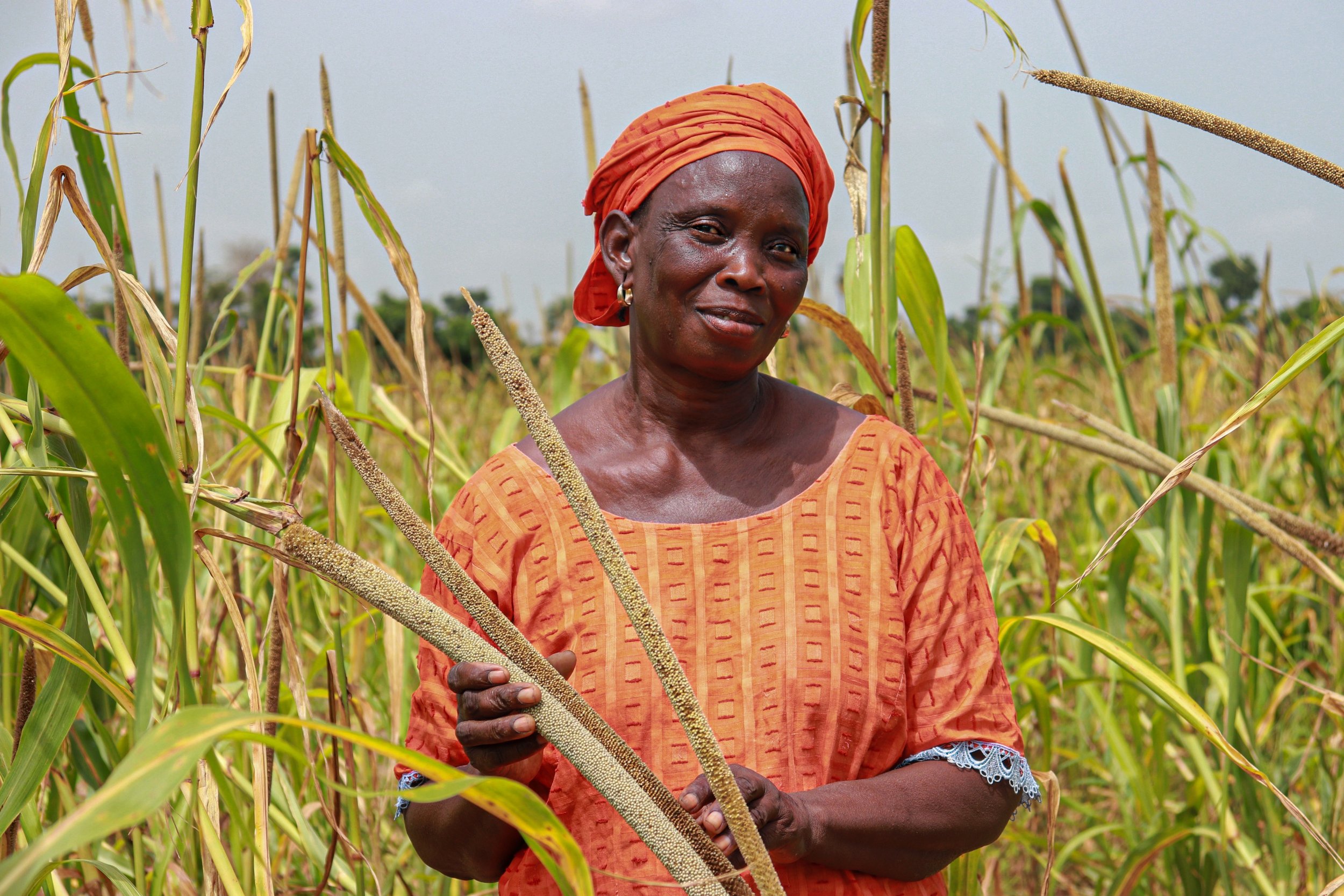
Mossane Faye inspects millet on her farm in Thiadiaye, Senegal.
Our work with AfDB ACFM’s Agri-SME Support Program has seen us support several impactful African agri-SMEs over the last two years. As part of our ongoing series on program’s success stories, we are sharing the journey of myAgro, a social enterprise helping farmers access inputs, training, and climate-smart agriculture in West Africa and Omia Agribusiness Development Group, an agribusiness improving smallholder farmers’ access to quality agricultural inputs and markets in Uganda.
myAgro, a social enterprise operating in West Africa, is transforming how smallholder farmers access the tools they need to thrive. It has pioneered a mobile layaway savings model that enables farmers, especially women, to save in small increments via their mobile phones and invest in high-quality seeds, fertilizer and climate-smart training. The organization, which was recently featured in a blog post by the Africa Development Bank, serves more than 250,000 farmers across Senegal, Mali, and Cote D’Ivoire, with over 60% of the farmers being women, enabling them to increase yields by up to 180% on average, ultimately strengthening food security and building more resilient livelihoods.[2]
“My small millet field used to yield only 30 kg of millet, but with myAgro, I now harvest 64 kg from the same land. The difference has been incredible. When I sold the millet, I bought a sheep. In my second year, I sold millet again and bought another sheep. This brought me two sheep. I raised them and sold them… I sold them for 200,000 francs and some. Then, I bought a beautiful cow for 175,000 francs. With the rest, I bought chicks to raise” Khady Diouf, Medine, Senegal
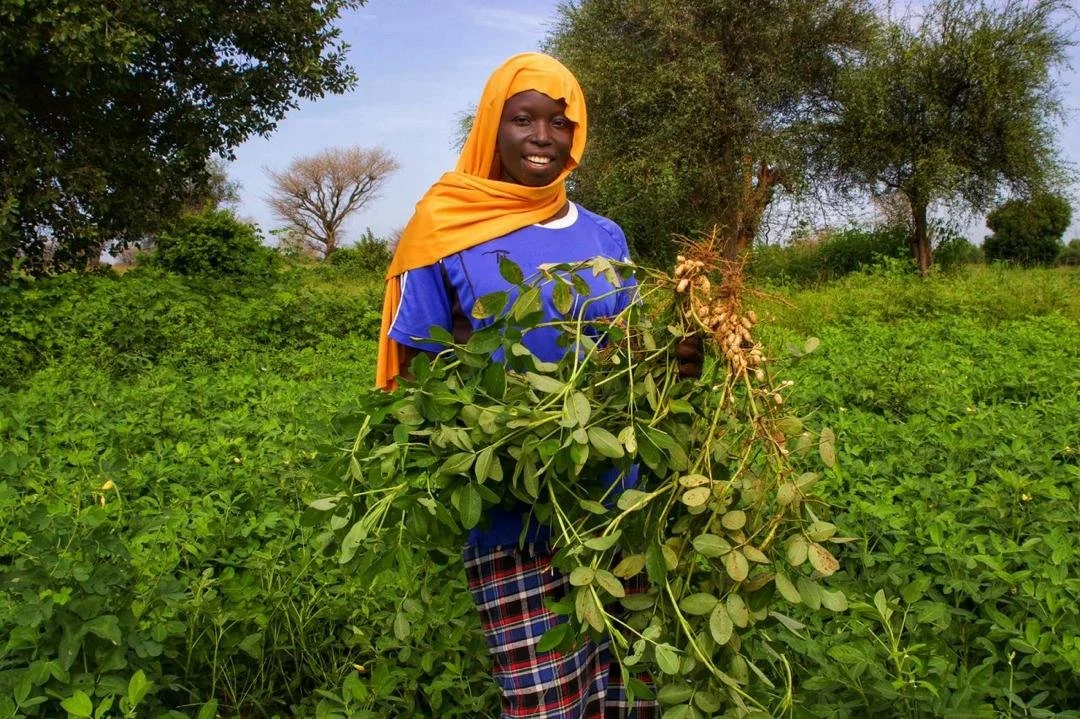
Khady Diouf holds freshly harvested groundnuts on her farm in Medine, in the west of Senegal.
By providing a disciplined, accessible pathway to invest in their farms, myAgro enables women farmers to make informed financial decisions and access quality inputs at the right time, directly addressing structural barriers.
Similarly, Omia Agribusiness Development Group is addressing structural barriers in Uganda linked to climate vulnerability and limited access to agronomic knowledge, challenges that disproportionately affect women farmers. Omia works directly with 96,000 farmers across northern Uganda to provide certified seeds, fertilizers, farm tools, animal feeds and veterinary products, along with free extension services and reliable pathways to profitable markets.
Through an extensive network of retail outlets, on-the-ground agronomists and USSD technology that allows farmers to access services without internet connectivity, Omia increases access to quality agricultural inputs and strengthens women farmers’ capacity to adapt and grow, narrowing structural disadvantages, including in adapting to climate risk with more than 1,200 farmers in its network having adopted climate-smart practices to date.
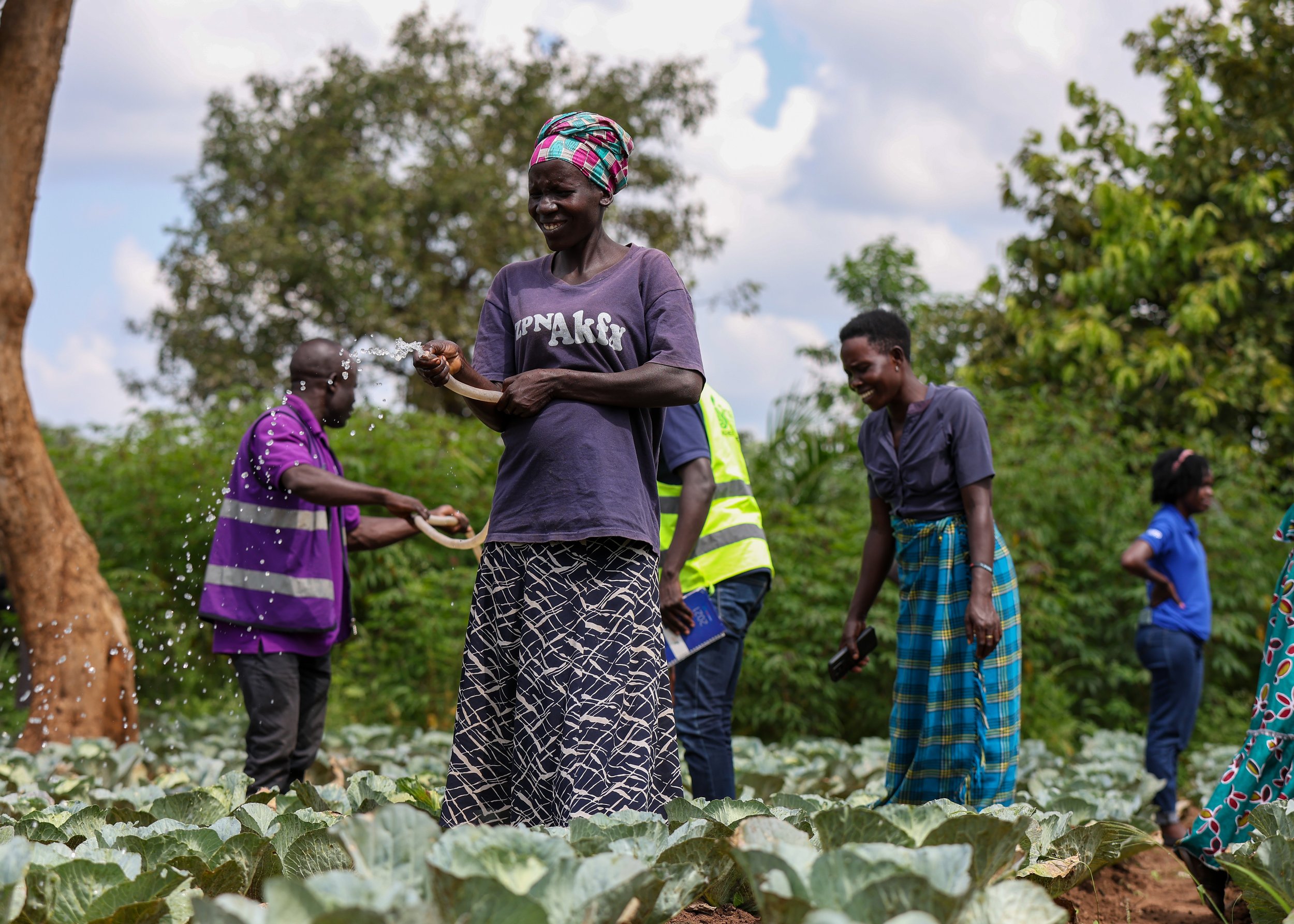
A member of Mindajuru Farmers Group - Koboko, demonstrating how the solar water system works.
Innovative models alone are not enough to dismantle structural barriers for women. Scaling inclusive enterprises requires catalytic support. Through the African Development Bank’s Agri-Food SME Catalytic Financing Mechanism (ACFM) program, targeted transaction advisory and technical assistance are helping businesses like myAgro and Omia to expand their impact, reaching even more women farmers. myAgro was supported to structure and secure a $1.3M capital injection to extend the reach of their operations to more women farmers over the next two years. Omia, on the other hand, received technical assistance to strengthen its growth and investment strategy, contributing to unlocking a flagship capital raise to expand into new districts, onboard 18,000 new farmers (including women farmers), and increase investment in logistics and distribution to scale input distribution and farmer training programs.
By delivering fit-for-purpose technical assistance the Bank, through ACFM, is strengthening African enterprises that are actively dismantling structural barriers for women, improving their access to finance, enhancing their climate resilience and expanding their market opportunities. Moving from recognition to action means investing in solutions that put agency, resources and opportunity directly into the hands of women farmers and scaling the models that make that possible. Plenty remains to be done, but companies like myAgro and Omia show us there is a way to sustainably support women farmers, at scale.
